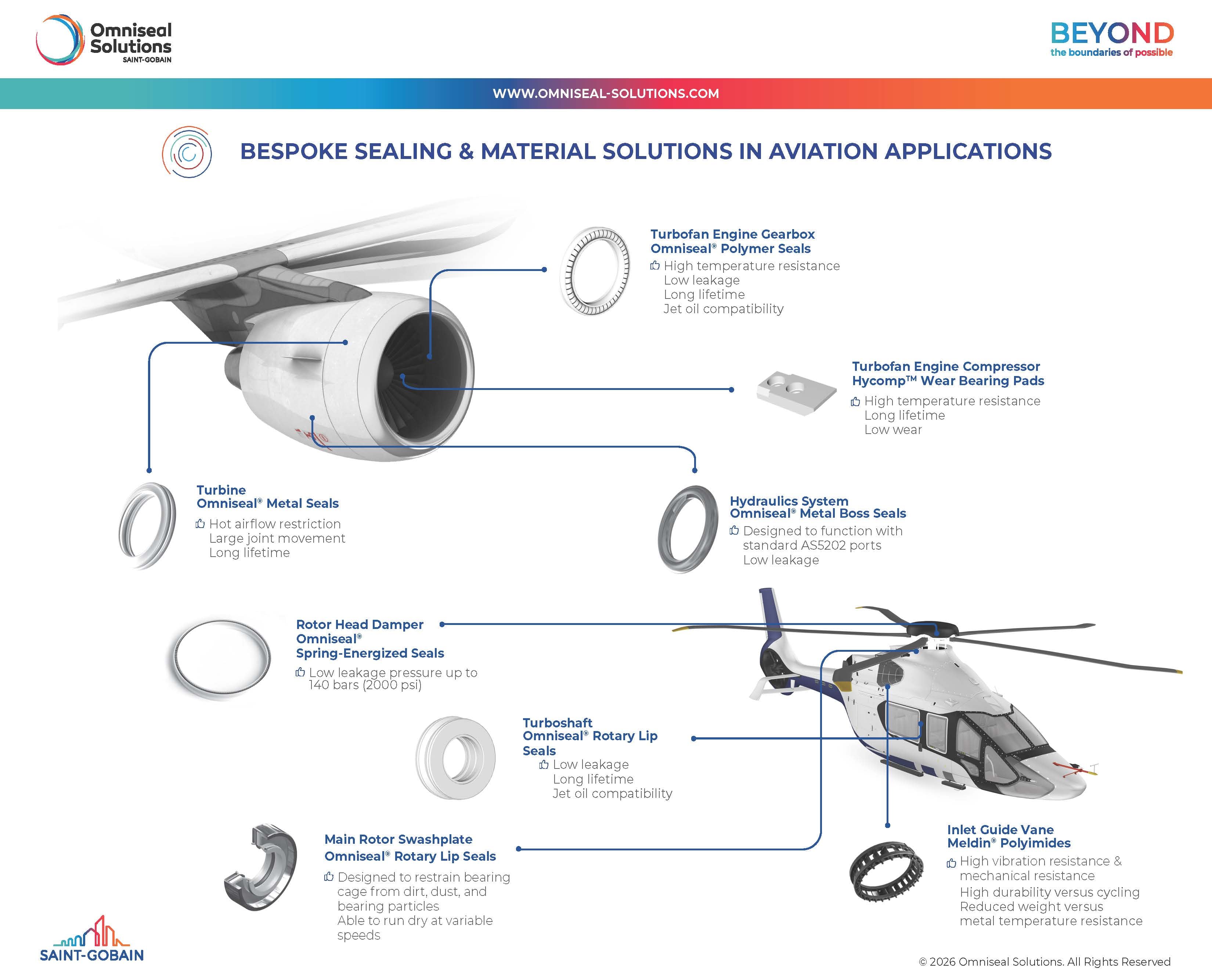
Infographics

Lightweight Sealing Solutions: Aviation Helicopter & Aircraft Applications

Lightweight & Low Wear Components For Aviation Industry

Description

Do you know why the aviation industry uses a combination of metal and polymer seals in commercial aircraft and helicopters? Due to a multitude of complex systems, no single material can withstand the varying extreme technical demands: temperature, pressure, chemical exposure, corrosion resistance, wear and friction, and lightweighting. Engineers need to rely on these sealing technologies and materials to ensure safety, minimize weight, and prevent leaks.

High-performance polymer solutions such as spring-energized seals, rotary lip seals, composites and polyimides are widely selected for dynamic applications as they ensure fluid-tight integrity in high-stress areas, while specialized metal seals and plating solutions provide structural integrity and electrical conductivity. Take a closer look at our infographic for the various sealing and material solutions.


Description

Frequently Asked Questions About Our Helicopter & Aircraft Applications

A helicopter gearbox uncovered and displayed in a warehouse setting

Helicopter seals prevent the leakage of hazardous gases and fluids, i.e., engine oil, hydraulic fluid, and fuel, protecting critical rotor bearings, swashplates, and gearbox chambers from external contaminants like water and dust. Rotary lip seals are often selected as they withstand high rotational speeds and endure extreme temperatures, pressure differentials, and intense vibrations.

A plane in flight, on a cityscape background

Aviation systems (engines, landing gear, APUs) generate extreme heat, which require high-performance polymers (PTFE, PEEK, PAI), composites, polyimides or specialized metal seals to provide stable thermal properties across cryogenic and high operational temperatures.

Omniseal® Polymer Metal Seals Group

Polymer seals and materials have a significant impact in fuel efficiency related to engine performance and aerodynamics:

  1. In jet engines, they provide sealing control by preventing compressed air and gases from leaking. This increases compression ratio and thermal efficiency.

  2. They reduce drag and turbulence, using less thrust to maximize aerodynamic flow.

A hybrid electric engine isolated on a white background, showcasing the different sealing, wear & friction control solutions provided by Omniseal Solutions

Aerospace-grade seals and materials for military and commercial use overlap; however, military helicopters often require seals rated for specialized exposure (e.g., severe vibration, combat environments, or resistance to specialized chemical agents and JP-8 aviation fuel). In high-stress, high-rotation applications such as rotorheads, gearboxes, and hydraulic systems, both sectors typically use high-performance polymers like spring-energized and rotary lip seals.

Aviation eVTOL Industry

Aircraft and helicopter seals must conform to strict regulatory specifications: SAE Aerospace Standards, Military Specifications (MIL-SPEC), and Federal Aviation Regulations (14 CFR), which dictate materials, tolerances, testing procedures, and quality control. These standards ensure resilience against extreme temperatures, pressures, and harsh fluids for airworthiness. Manufacturers typically produce seals compliant with ISO 9001, ISO 14001, and specific regulations.

Tags: Mobility Standard Applications